Recent Press Highlights
CBC News Calgary,
Wednesday October 15th, 2025
Michelle McCann
Read the article online HERE
Many Banff residents won't be able to vote in municipal election
Permanent residents say local decisions shape their daily lives, but the ballot box remains closed to them.
Natasha Lay follows town council decisions, discusses local issues on Facebook and talks to her neighbours about the upcoming municipal election in Banff, Alta.
But she can’t vote.
The permanent resident has lived in the Bow Valley for six years. The ability to cast a ballot for town council, she said, would mean being seen as just as much a part of the community as anyone else.
I pay taxes, I work, I have a young family here, and I want to be able to contribute to the decisions that impact my life, impact my child's life, impact my friends and family here,” the Australian said.
And in a small town like Banff, she said, who is and isn’t able to vote is important.
“Who is elected is often decided by a handful of votes,” Lay said.
Lay is the executive director of the Bow Valley Immigration Partnership, which helps settle newcomers and works on inclusion across the region. Throughout this election period, the group has kept permanent resident voting rights in the spotlight at local forums.
About a third of the residents in the Bow Valley were born outside Canada, according to the 2021 federal census. Many are long-term permanent residents, pay local taxes and get health-care coverage, but they can’t vote.
Last year, Banff town council backed permanent resident municipal voting rights at the Alberta Municipalities convention, but the effort failed to pass.
For now, Lay wants Bow Valley leaders to get creative in how they gather input from non-voting residents and to show up where people already gather.
"There is a real strong sense of community here, which I love about Banff. It would be even stronger if we could all have a say in those decision-making processes,” said Lay.
Town of Banff says they are advocating for PR rights
In an email to CBC News, the Town of Banff says it has just adopted a new Public Input Policy to expand engagement with residents regardless of citizenship. The town also says it will continue to advocate for municipal voting rights for permanent residents.
But in a statement to CBC News, Alberta Municipal Affairs Minister Dan Williams said, “You have to be a Canadian citizen to vote in a municipal election and this is not changing.”
Anna Triandafyllidou, a professor at Toronto Metropolitan University and Canada Excellence Research Chair in Migration and Integration, said it can take as little as three years to become a Canadian citizen and so that is one reason why permanent residents lack voting rights.
But she said many permanent residents are active in their communities and they can even join political parties, so offering municipal voting rights to permanent residents could make sense.
“Why not use local voting rights as a training ground … a way of giving people a voice and getting them more connected to their communities?”
Jodi Gammad moved to Banff from the Philippines in 2020. Like many people in town, she said affordability is her top concern. She said many permanent residents work multiple jobs to stay afloat, and some support family abroad, stretching budgets even thinner.
Because permanent residents can’t vote, she said municipal discussions often miss how issues like affordability impact them.
“When there is an issue, underrepresented and equity-seeking groups always experience another layer of difficulty. We don't go deep enough to see the actual challenges of, let's say, the Filipino community,” she said.
Gammad said she has felt alienated by not getting to vote and the lack of input she's had in municipal decisions that have impacted her daily life.
Now, as she applies for Canadian citizenship, she’s paying closer attention to local politics and feels a greater responsibility to understand how decisions are made in her community.
Gammad added there’s a lot to love about Banff, especially its strong sense of community. But she wants local leaders to act on the fact that permanent residents contribute just as much.
“And so I would love to see us being given the same opportunity to express what we need and what we want."
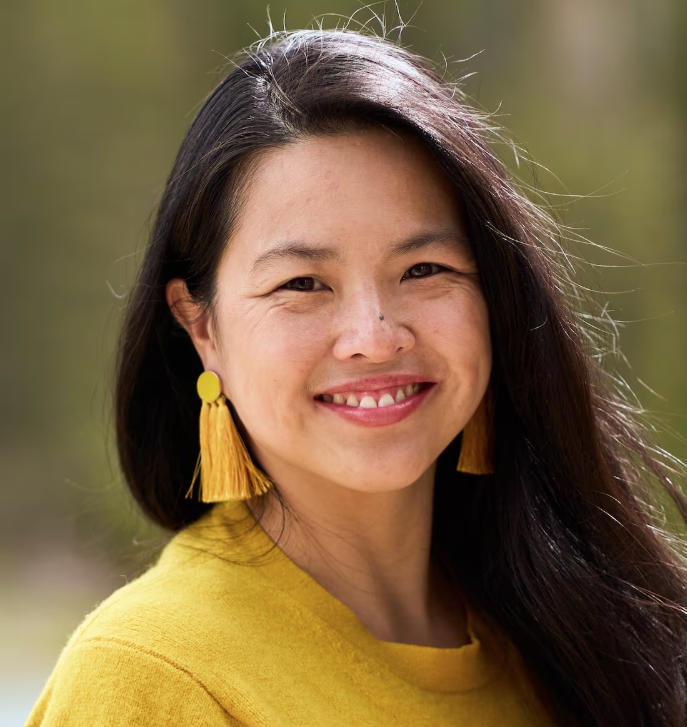
Banff resident Natasha Lay wants permanent residents like her to have a voice in local elections.
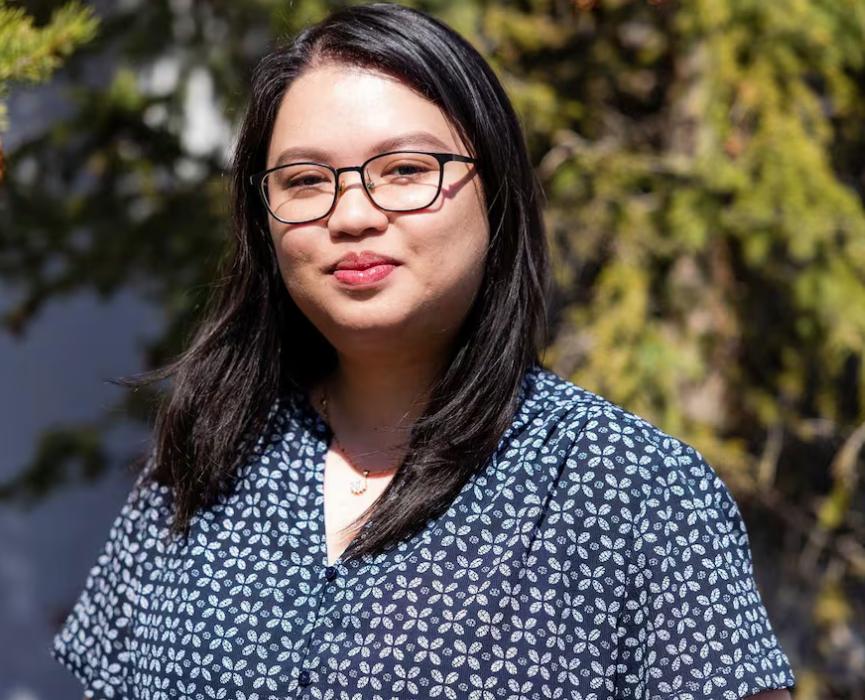
Jodi Gammad lives and works in Banff. She worries about being able to stay in Banff long-term because of affordability issues.
Rocky Mountain Outlook
Sunday October 18th, 2025
Cathy Ellis
Read the article online HERE
All-candidates forum calls for extending voting rights to permanent residents in Banff
“Whether permanent residents or temporary foreign workers, they are in our community, they are the backbone, they are the workforce, and their voice and experience matters so much in Banff." – Kaylee Ram
BANFF – The Town of Banff plans to explore new and better ways to engage with foreign-born residents who call the national park townsite home, given the province won’t extend voting rights to permanent residents.
During an all-candidates forum hosted by Banff and Lake Louise Hospitality Association (BLLHA) on Wednesday (Oct. 8), several candidates were asked what they would do to actively include permanent residents in decision-making if elected on Oct. 20.
Kaylee Ram, who is seeking a second term on council, said the Town of Banff must continue to advocate to the provincial government through Alberta Municipalities for voting rights for permanent residents, who live, work, contribute and pay taxes in the community.
She also spoke to Banff’s new public input policy that calls for making engagement inclusive of Banff’s diverse community and applying additional efforts to connect with hard-to-reach or marginalized communities affected by municipal decisions.
“Whether permanent residents or temporary foreign workers, they are in our community, they are the backbone, they are the workforce and their voice and experience matters so much in Banff,” she said, noting her partner is a permanent resident who can’t vote in the upcoming municipal election.
“Ensuring that they are at the table, they are participating and their voices are being heard will be absolutely crucial in the next steps.”
Last year, Banff council supported a motion to Alberta Municipalities to lobby the provincial government to amend the Local Authorities Election Act to expand voter eligibility to include individuals who have been granted Canadian permanent resident status.
Alberta Municipalities defeated the motion. The resolution needed a majority to pass, but only got about 42 per cent support. In addition, Premier Danielle Smith has long dismissed the idea as unconstitutional.
According to the 2021 federal census, 27.3 per cent of Banff’s population were immigrants, either landed immigrants or permanent residents, representing a slight increase from 25 per cent in 2016. Another 9.3 per cent of the population were non-permanent residents who are individuals born overseas but living in Banff with varying types of work or study permits.
In addition, Banff’s percentage of immigrants and non-permanent residents continues to be greater than both Alberta and the rest of Canada and other similar communities, including Whistler, Jasper and Canmore.
Brian Standish, a former town councillor who lost his run for mayor in the 2021 election to Corrie DiManno, said the Town of Banff has to continue advocating to the provincial government for the right for permanent residents to vote.
“Everyone who comes here, works here, lives here, I think deserves the right to vote, and unfortunately, the Alberta government sees it differently,” he said. “It’s advocating, pushing that thought forward and eventually, hopefully, it will happen.”
Allan Buckingham, who is trying a third time to win a seat at the council table, said everyone’s voice matters whether you are a “permanent resident, a temporary foreign worker, a Canadian citizen, or someone who’s here for a weekend.”
“It would be great if we could get a vote because that has a different kind of weight for permanent residents and I am all over that advocacy,” he said.
“But actually right now… I am going to be listening to everyone’s voice and encouraging them to talk to other councillors, join committees, and contribute in the public input sessions. Your voice always matters.”
Banff’s 2023 community social assessment notes the largest change in foreign-born residents occurred between 2006 and 2011 when there was a sizeable 12 percentage point increase seen in the number of immigrants as a percent of total population in Banff.
According to the assessment, it appears this change in demographics aligned with the increased practice of overseas recruitment on the part of local tourism industry employers and to increased use of the temporary foreign worker program.
Between 2016 and 2021, the percentage of foreign-born residents in Banff increased three percentage points from 34 per cent of the population to 37 per cent of the population.
The top five countries of birth of immigrants in Banff in 2021 were: Philippines (28.4 per cent of the immigrant population), Japan (12 per cent), the United Kingdom (10 per cent), Australia (6.4 per cent) and India (five per cent).
While she has been acclaimed as mayor, Corrie DiManno addressed the packed house at the start of the BLLHA forum, saying this issue is “one that is really close to my heart” because her grandparents immigrated to Canada from Italy.
“I have a super, super soft spot for our foreign-born and immigrant populations because I know the hope and the hardship that comes with that,” she said.
DiManno said it was unfortunate that Alberta Municipalities’ resolution failed, but also pointed to Banff’s new public input policy.
“Permanent residents pay taxes, they work here, they contribute here, they volunteer here, their kids are being raised here, and they should have a say like everybody else,” she said.
“We have a new public input policy and it speaks to basically going above and beyond to ensure that we are hearing from diverse voices and that we are thinking of innovative ways to reach these communities that might not normally be participating.
“There’s going to be a real effort to ensure that all voices are being heard on big projects and programs.”
Eight Communities, One Bow Valley
One in Three
One in three Bow Valley residents was born outside Canada*
32.8%

32.8% of Bow Valley Residents were born outside Canada*
*Statistics Canada, 2021 Census
7,700
That’s just over 7,700 neighbors, colleagues, community members and friends*